
Aiden grew up in stark poverty. When he was 12, in order to help support his family, Aiden took a job delivering groceries from a local bodega.
After working for a few months, Aiden made a startling discovery. While he thought the bags he was delivering contained food for customers in his neighborhood, they actually contained drugs: cocaine, methamphetamine and marijuana. Aiden wasn’t delivering food to his neighbors. He had been tricked into running drugs.
What prompted Aiden to make this discovery? The person he thought was his employer was holding back money and not paying Aiden what the two had agreed upon.
In fact, Aiden’s employer was a human trafficker, coercing Aiden to make drug runs and withholding his pay as a means to control him. The trafficker also threatened Aiden and told him if he didn’t do what he was told, or tried to tell anyone, he would be hurt.
Imagine the circumstances: a twelve-year-old boy is trying to earn some cash by making local deliveries, only to find out that his job was an illegal activity and he had been “hired” by someone who never intended to pay him or let him move on.
Unfortunately, Aiden’s situation is all too common. According to research done by the Covenant House Action and Research Tank (CHART), 56% of all victims of human trafficking were minors at the time of their first trafficking experience. Aiden wasn’t even the youngest person in the study: children as young as 7 were found to have been trafficked.

Being forced into criminal actions is also not unique to Aiden. This type of human trafficking often involves what experts call “forced criminality”—situations where the victim is coerced into performing a crime under the threat of violence. Forced criminality makes it even hard for victims, particularly young people, to get the help they need to escape the trafficker, due to fear of interacting with public agencies like the police department.
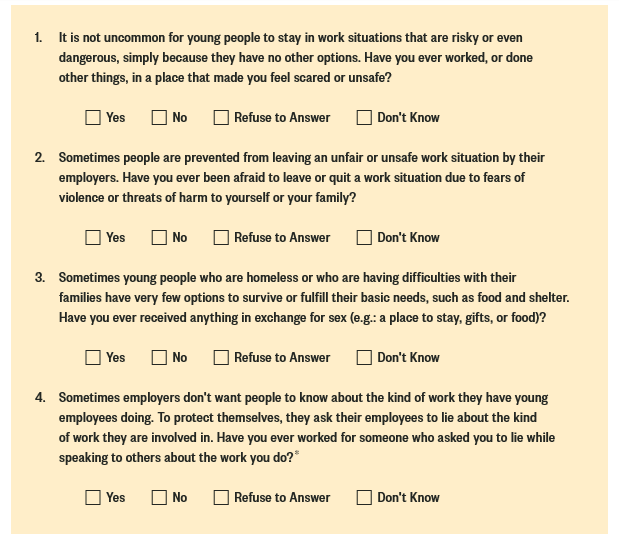
Importantly, Aiden found the help he needed at Covenant House. Using the QYIT screening tool, our staff was able to identify him as a human trafficking survivor—without retraumatizing him or asking invasive personal questions. By building the safe, trusting relationship Aiden needed, Covenant House was able to provide the intensive support of our Human Trafficking Victims Services team.
Aiden is just one of many young people we meet every day who need this kind of specialized care. Covenant House New Jersey works in partnership with the New Jersey Office of the Attorney General, along with public and private organizations across the state, to improve how victims of human trafficking are identified and supported. As the state-designated lead agency in this work, our CHART group conducts research, training, and pilot programs that help survivors move toward independence and freedom from exploitation.